Wondering whether Paradise Valley Village or the Town of Paradise Valley is the better fit for you? You are not alone. The names are similar, the areas touch, and both offer luxury living with mountain views and resort access. This guide lays out the real differences so you can choose with confidence based on budget, lifestyle, and long-term plans. Let’s dive in.
Paradise Valley Village vs Town: Overview
Both areas sit in Maricopa County near Camelback and the Phoenix-Scottsdale core, but they are not the same place.
- The Town of Paradise Valley is its own municipality with a low-density, estate-focused feel and stronger design control.
- Paradise Valley Village is a City of Phoenix planning area with a wider range of homes, price points, and lot sizes.
- Both offer access to hiking, golf, dining, and major employment hubs, though daily experience and redevelopment paths differ.
Jurisdiction and services
Your property’s municipal address sets the rules. In the Town of Paradise Valley, local planning, permitting, and code enforcement run through the Town. Policies often favor preserving larger lots and the existing character.
In Paradise Valley Village, you are inside the City of Phoenix. City zoning and permitting apply, which allows for a broader range of residential options in different pockets. Police, public works, and code enforcement are handled by each jurisdiction, so expectations for response and processes can vary.
Property taxes are assessed by Maricopa County for both, but total tax rates and special assessments can differ by jurisdiction and district. Always request a current tax breakdown or recent bill during due diligence.
Housing and lot character
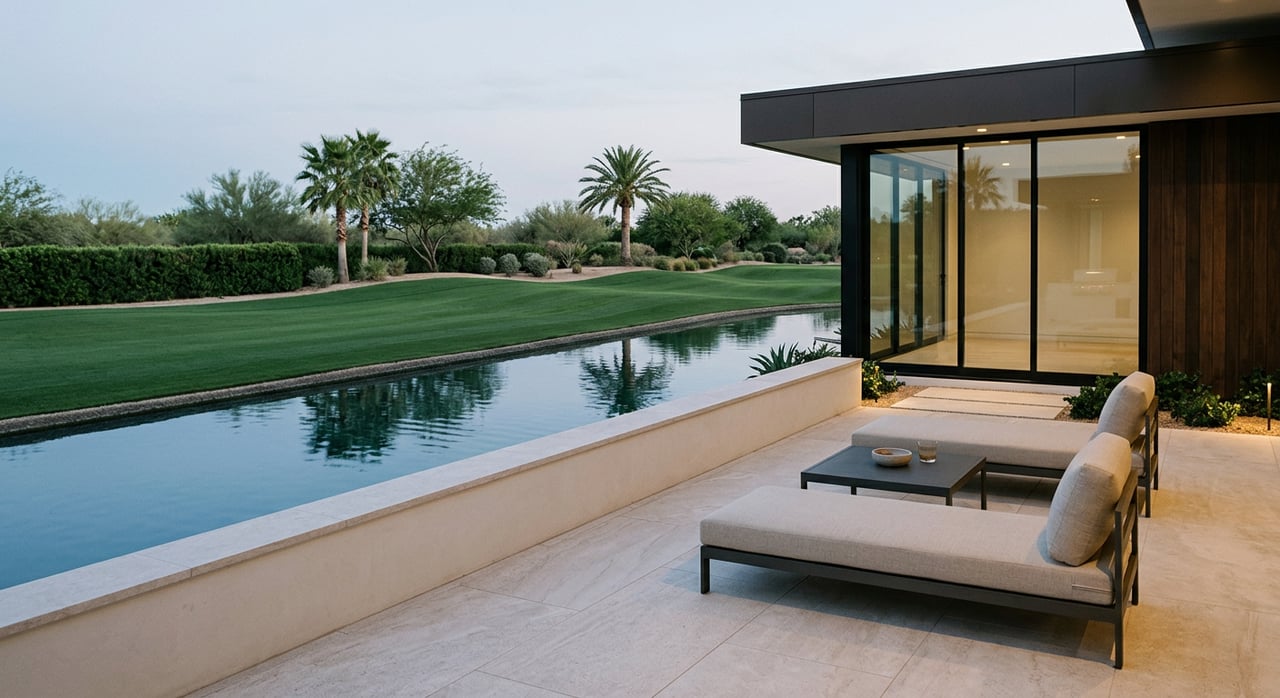
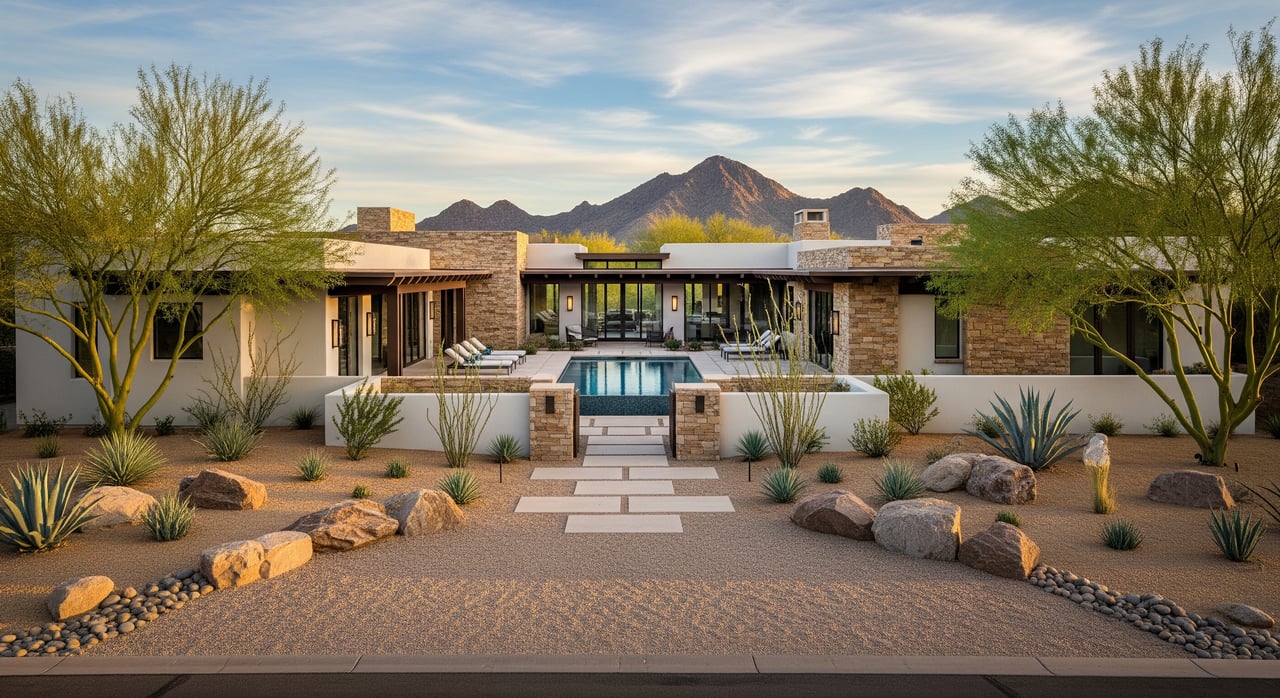
The Town of Paradise Valley is known for custom estates on larger parcels with generous setbacks. Privacy and mountain view orientation are common. You will see Mediterranean, contemporary, Spanish, and other custom luxury styles designed at estate scale.
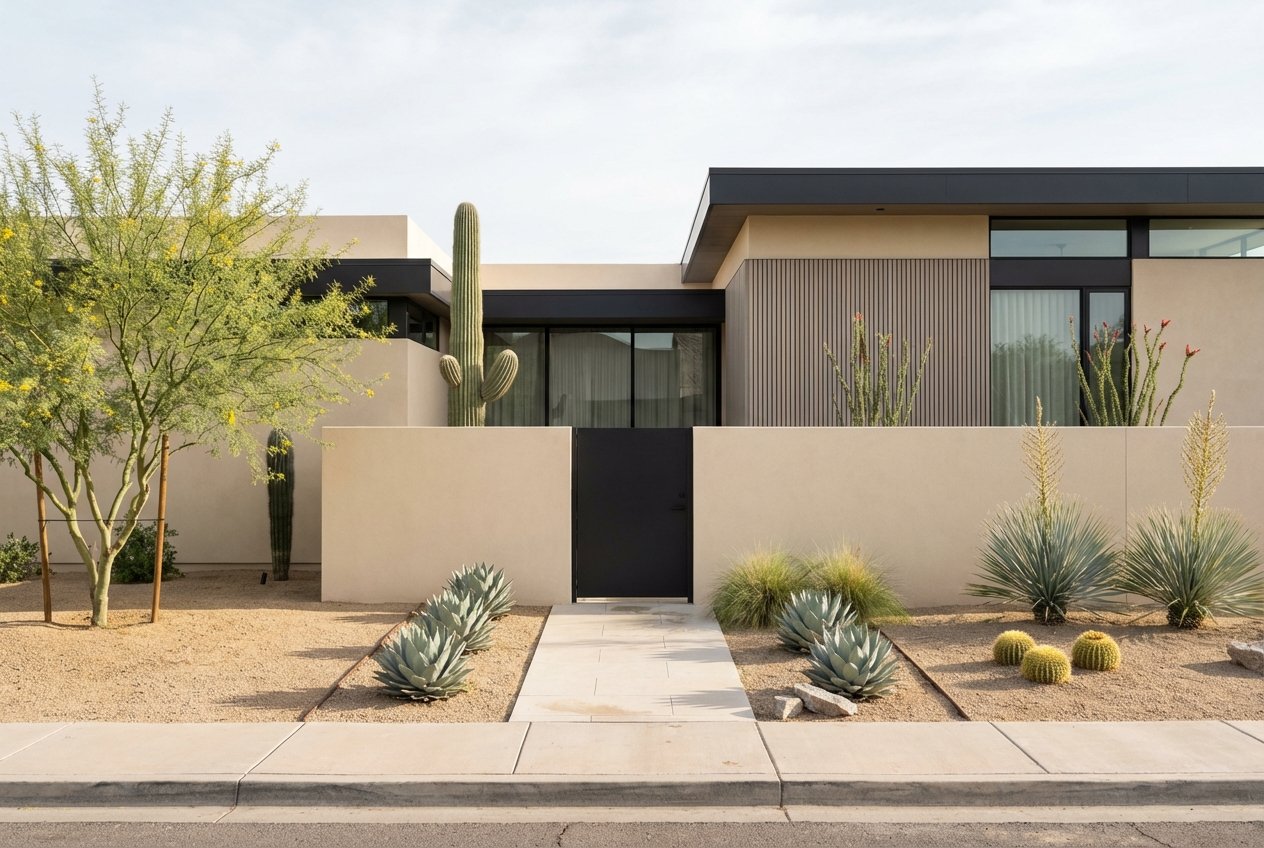
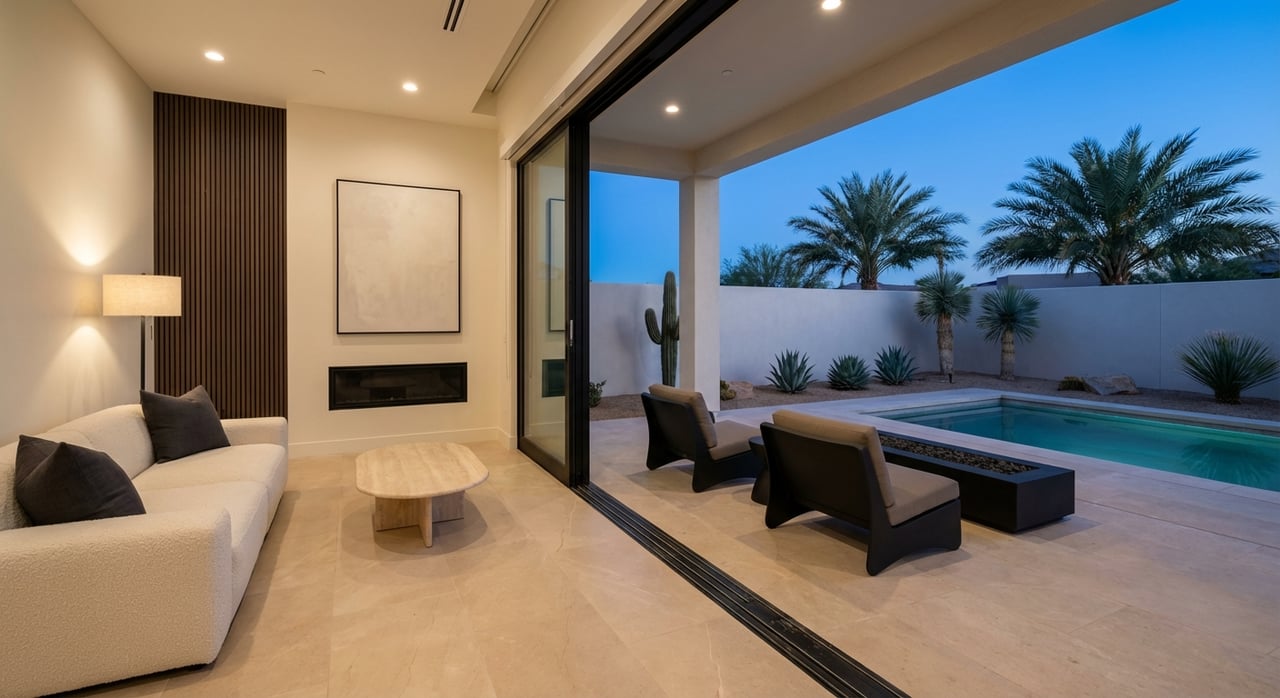
Paradise Valley Village offers more variety. You will find mid-century ranch remodels, infill modern new builds, smaller-lot luxury, and a few larger-lot enclaves that echo the Town’s feel. Turnover and product mix are broader, which can create more options at different price points.
Zoning and redevelopment
If you want to add, split, or rebuild, rules matter. The Town of Paradise Valley typically applies more restrictive zoning and design review aimed at preserving low density and lot character. Major changes often require discretionary review and more time.
In Phoenix’s Paradise Valley Village, city zoning categories provide a wider range of allowable densities and uses, depending on the parcel. Some locations allow remodels or lot splits that would not align with Town standards. Always verify a property’s exact zoning designation and setback requirements before you plan a project.
HOAs and neighborhood rules
Both areas include neighborhoods with and without homeowners associations. In the Town, many large estate lots are not in HOAs, though gated enclaves and resort-adjacent communities may have them. In Paradise Valley Village, you will encounter a mix of older subdivisions without HOAs and newer gated or condo developments with formal HOAs.
Fees match services and amenities. Gated security, private roads, shared landscaping, and attached product maintenance generally lead to higher dues. HOA design review can control exterior changes, pools, additions, and visible landscaping, and it is separate from municipal approvals. Plan for both when applicable.
Commute and access
Both areas connect to major job and lifestyle centers. Typical drive times outside heavy rush hour often range as follows, depending on the exact parcel: central Phoenix and the Biltmore area in about 15 to 25 minutes, Old Town Scottsdale in about 10 to 25 minutes, and Phoenix Sky Harbor in about 15 to 30 minutes.
Common routes include Loop 51, Loop 101 and Loop 202 regionally, with Shea Boulevard, Camelback Road, and Doubletree Ranch Road as key arterials. Public transit is limited compared with urban cores, and light rail does not directly serve these areas. Walkability varies by neighborhood.
Lifestyle and recreation
Both locations provide easy access to outdoor recreation and mountain views, including Camelback and Piestewa Peak. You will find nearby private and resort golf options, along with a range of hotels and day spas in the greater Phoenix-Scottsdale area.
Paradise Valley Village tends to sit closer to central Phoenix and Biltmore shopping and dining. The Town’s identity centers on private estates, low density, and quieter streets, with residents often using nearby Phoenix and Scottsdale corridors for retail and dining.
Schools and education
School assignments depend on the specific parcel. Parts of both areas may feed into the Paradise Valley Unified School District, while others may be assigned to different districts. Because boundaries and programs can change, verify current district maps, review available ratings sources, and plan your school commute as part of due diligence.
Which area fits your priorities
- Privacy and estate scale: The Town of Paradise Valley is typically the best match.
- More product variety and proximity to central Phoenix: Paradise Valley Village may fit better.
- Redevelopment, additions, or potential lot splits: City of Phoenix zoning often provides more flexibility, depending on parcel.
- Gated communities and resort-living options: Both areas offer them. Compare fees, rules, and amenities by community.
- Lower landscape and pool maintenance: Smaller-lot homes in Paradise Valley Village can reduce the yard footprint and upkeep.
Buyer due-diligence checklist
- Confirm the property’s municipal jurisdiction on county parcel records.
- Verify zoning and any overlay districts, including design review requirements.
- Request HOA documents, CC&Rs, recent meeting minutes, and reserve studies if applicable.
- Review the most recent property tax bill and parcel history from the county assessor.
- Pull recent comparable sales and days on market for price validation.
- Confirm school assignments with current district boundary maps and review available ratings sources.
- Inspect utilities, irrigation, and any water-use rules that affect landscaping and pools.
- If mountain views matter, verify view easements and nearby redevelopment potential under current rules.
- Discuss insurance needs for luxury builds, pools, and guest houses with a local provider.
Choose with confidence
If you want quiet streets, larger lots, and a strong privacy profile, the Town of Paradise Valley delivers. If you prefer a mix of price points, more redevelopment paths, and closer access to Phoenix lifestyle hubs, Paradise Valley Village is compelling. Your goals, maintenance appetite, and long-term plans should guide the decision.
Ready to compare shortlists, evaluate zoning, and map out remodel or new-build paths with a local, high-touch team? Connect with MP Real Estate Group for a private consultation. Our integrated sales, development marketing, and property management services help you move from search to close to ongoing care with confidence.
FAQs
What is the key difference between Paradise Valley Village and the Town of Paradise Valley?
- The Town is an independent municipality focused on low-density estates, while Paradise Valley Village is a City of Phoenix planning area with broader product types and zoning flexibility.
How do property taxes compare between the Town and Paradise Valley Village?
- Both are in Maricopa County, but total tax rates and assessments can vary by jurisdiction and district, so request the current tax bill during due diligence.
Are HOAs common in both the Town and Paradise Valley Village?
- Yes, but prevalence varies by subdivision, with many Town estates outside HOAs and a wider mix of non-HOA and gated HOA communities in Paradise Valley Village.
Which area is better if I plan a major remodel or new build?
- Phoenix parcels in Paradise Valley Village often allow more flexibility based on zoning, while the Town typically has more restrictive design review and lot-preservation policies.
What are typical commute times to Scottsdale, central Phoenix, and Sky Harbor?
- Depending on the property and traffic, Old Town Scottsdale is about 10 to 25 minutes, the Biltmore and central Phoenix about 15 to 25 minutes, and Sky Harbor about 15 to 30 minutes.
Where will I find larger lots and more privacy by design?
- The Town of Paradise Valley commonly features larger lots, greater setbacks, and estate-scale properties oriented for privacy and mountain views.