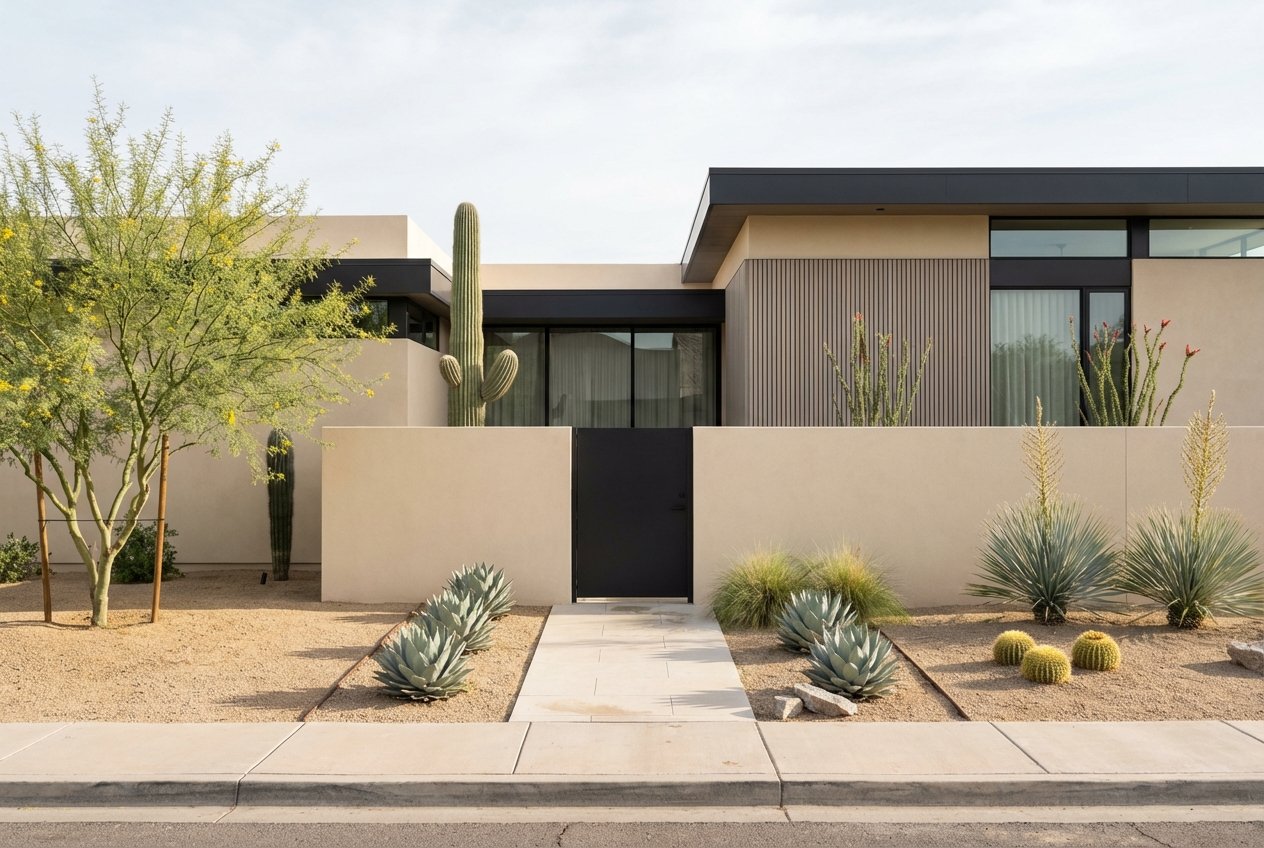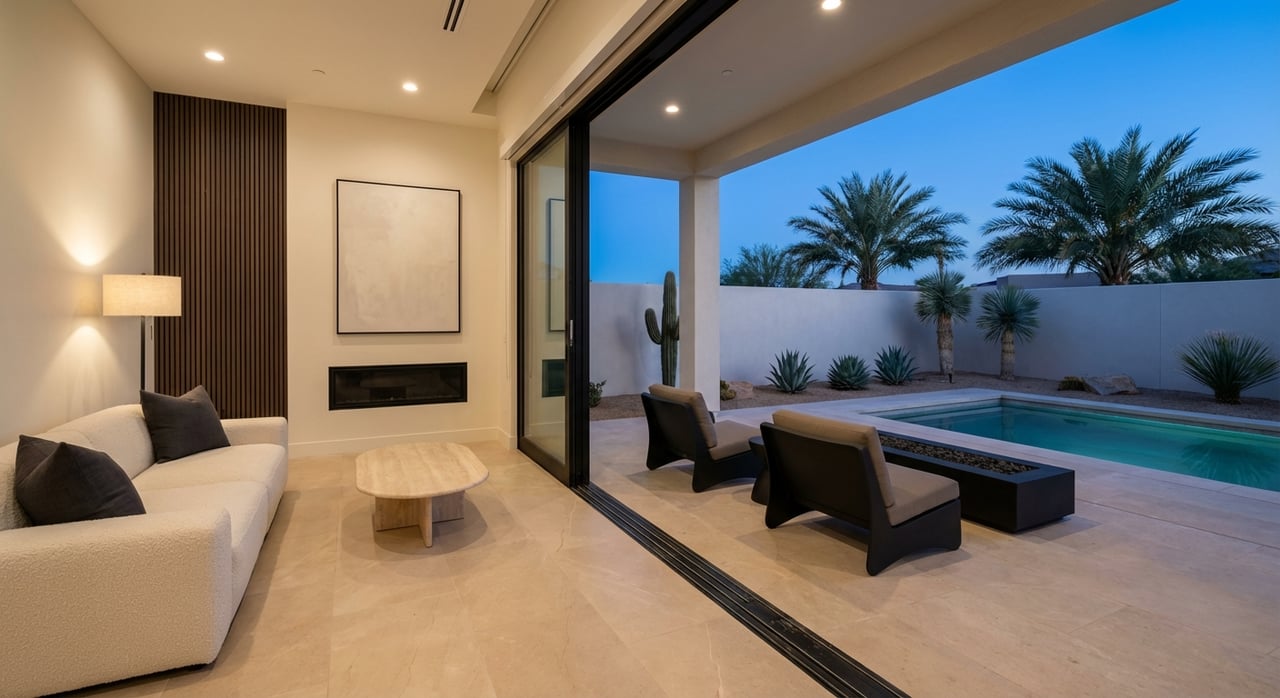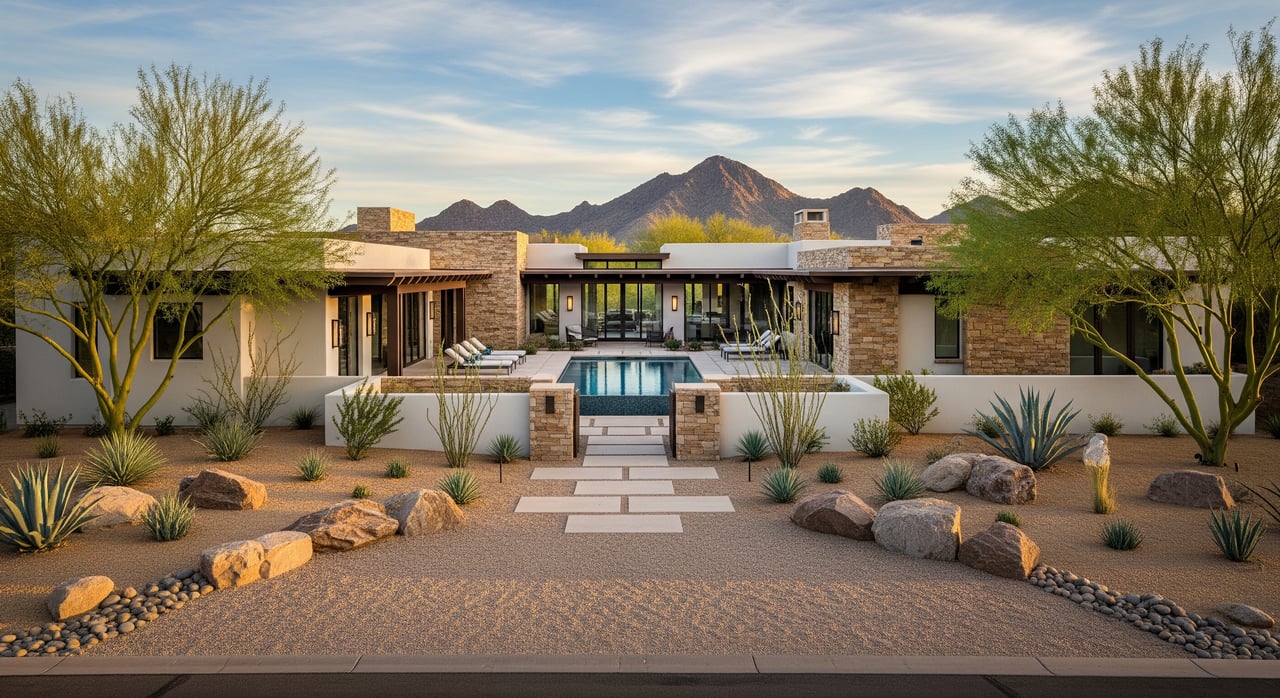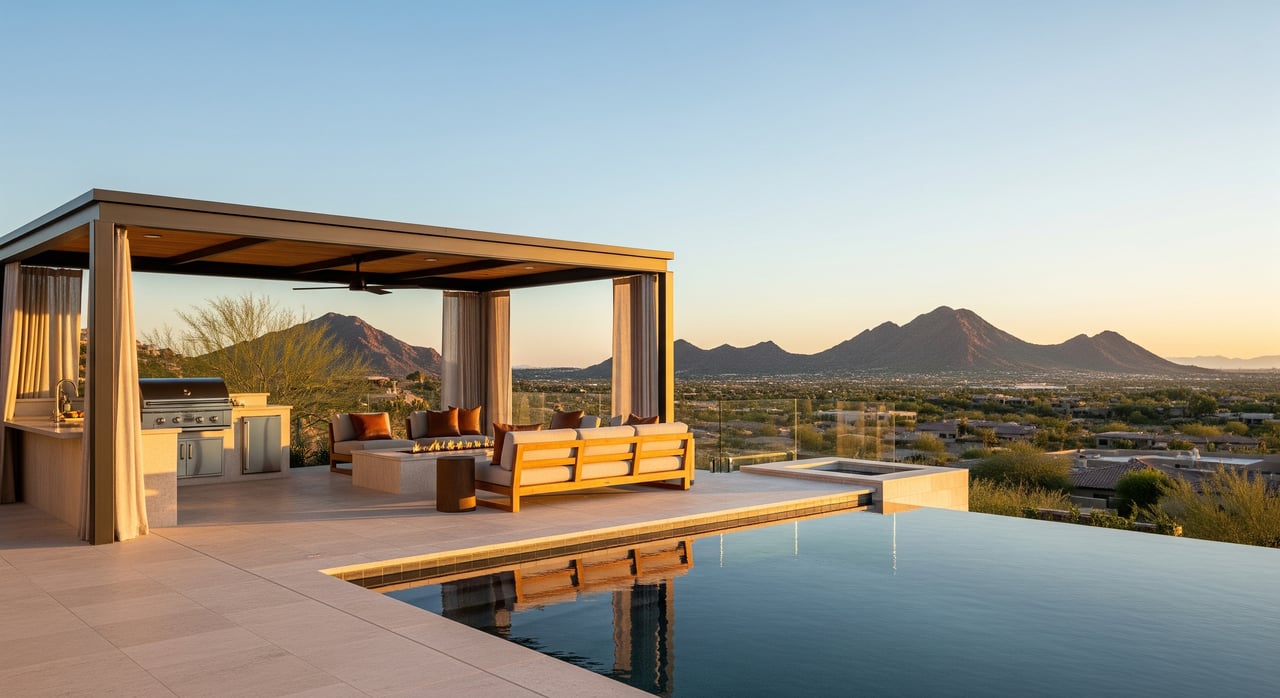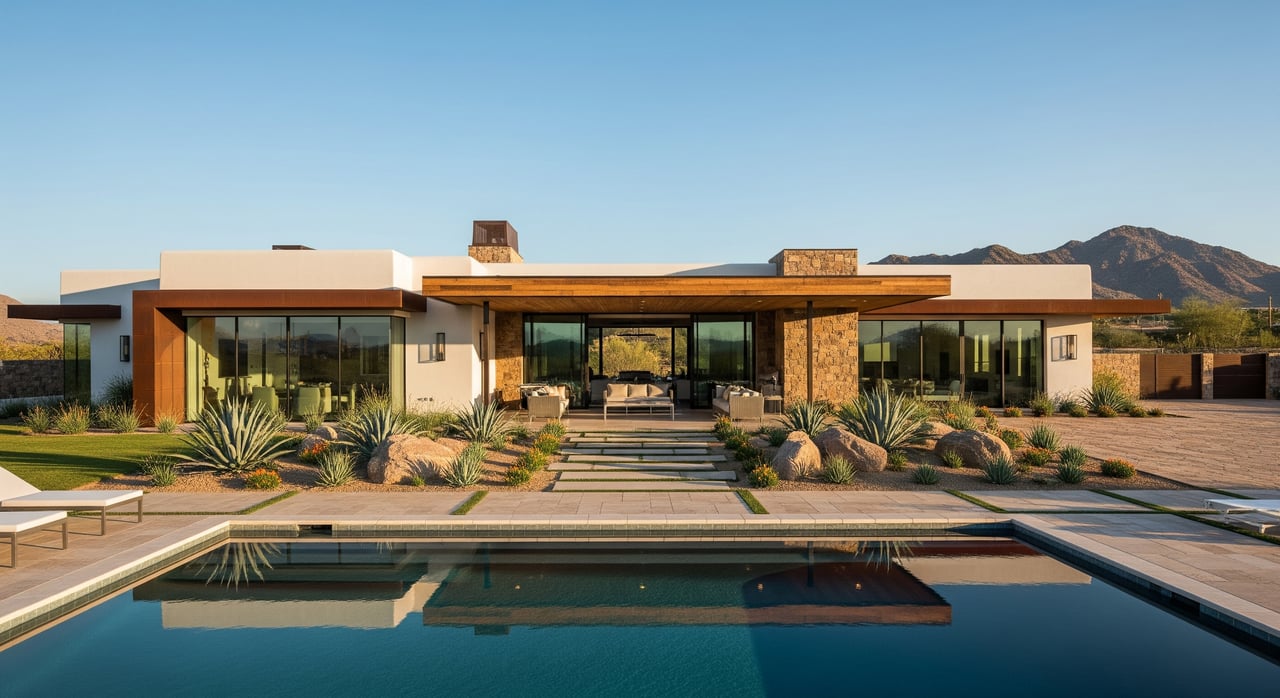
Building a custom home in Paradise Valley Village is exciting, but the real question is simple: what will it cost and how long will it take? If you are weighing a view lot against a faster, flatter build, or deciding whether to tear down and rebuild, you are not alone. This guide gives you a clear framework for total cost, a realistic timeline, and the local steps that matter inside the City of Phoenix. Let’s dive in.
Paradise Valley Village vs. Town of Paradise Valley
Paradise Valley Village is an administrative village of the City of Phoenix, not the separate Town of Paradise Valley. If your lot is in the village, the City of Phoenix handles zoning, permitting, and code enforcement. County agencies, such as the Maricopa County Assessor and Recorder, manage property records and tax assessments.
This difference affects your approvals, fees, and timelines. It also shapes development standards like setbacks, lot coverage, and height limits that influence design, buildability, and cost.
Your total budget: the full picture
When you plan a custom home, group your costs into clear categories. This helps you compare lots, set allowances, and avoid surprises.
- Lot and closing: purchase price, title insurance, escrow, recording fees, and potential transfer taxes or recording costs.
- Site and utilities: grading, rock or boulder management, soils remediation, retaining walls, drainage, driveways, and utility extensions or upgrades.
- Hard construction: foundation, structure, envelope, roofing, windows, mechanical, electrical, plumbing, interiors, and finishes.
- Soft costs: architecture and engineering, surveys, geotechnical reports, permits and plan review fees, builder overhead and profit, insurance, and required inspections.
- Exterior amenities: landscaping and irrigation, hardscape, fencing, driveways, and outdoor living spaces.
- Pools and specialty features: pool or spa, outdoor kitchen, custom lighting, home automation, solar, and EV charging.
- Contingency and escalation: reserves for unknown site conditions, scope changes, or material price changes.
- Furnishings and move-in: often outside the construction contract but important for your total outlay.
Lot and site costs that move the needle
Your lot choice is the biggest early decision. The land price, plus the site work required to make it build-ready, drives your total budget and timeline.
What drives lot costs
- Location within the village, view potential, and privacy.
- Lot size, shape, and buildable envelope based on setbacks and coverage limits.
- Existing structures that require demolition.
- Utility availability and capacity on or near the site.
Hidden site expenses to plan for
- Site prep: grading, tree removal, boulder or rock excavation, and soils remediation.
- Retaining walls and drainage: wash management, culverts, and stormwater solutions.
- Utilities: water and sewer connections or septic evaluation where applicable; power service upgrades; communications service.
- Access and driveways: paving, right-of-way coordination, and potential easements.
- Floodplain factors: verify any impacts from FEMA or local flood maps that could affect design or add cost.
Due diligence checklist before you buy
- Confirm parcel boundaries and easements through a title company and county records.
- Order a current survey appropriate to your lender’s requirements.
- Obtain a geotechnical soils report to guide foundation design and cost.
- Verify utility location and capacity, and request extension or upgrade estimates from utility providers.
- Review FEMA and City of Phoenix floodplain maps and consult Building Safety if needed.
- Confirm zoning district, setbacks, lot coverage, and height limits with the City of Phoenix.
- Review any HOA or deed restrictions that affect design.
- Ask an architect to sketch a preliminary site plan to confirm a realistic build envelope.
Permits and approvals inside Phoenix
Inside Paradise Valley Village, the City of Phoenix issues building permits and enforces codes. Plan review and permit timelines vary with the complexity and completeness of your submittal, review workload, and whether variances or special hearings are required. Expect that some projects move through in weeks while others take months.
Plan for building permit fees, plan review fees, and any impact fees that apply. Complex sites may need grading permits or specialty inspections. If your property has an HOA or neighborhood design review, include that timeline as well.
Build cost structure explained
Construction budgets include hard costs, soft costs, site work, and amenities. Instead of chasing a single price per square foot, use detailed line items and builder allowances so you can compare apples to apples.
Hard vs. soft costs
- Hard costs: foundation, framing, roofing, windows and doors, MEP systems, insulation, drywall, cabinetry, counters, tile, flooring, paint, fixtures.
- Soft costs: architectural design, structural and civil engineering, surveys, geotechnical testing, permits and plan review, special inspections, builder overhead and profit, insurance.
Factors that change the price
- Home size and complexity, including multi-level designs and high ceilings.
- Finish level, from standard packages to fully custom millwork and stone.
- Structural needs, such as deep foundations or significant retaining walls.
- Mechanical scope, including multi-zone HVAC and high-efficiency systems.
- Specialty systems like solar arrays, automation, and EV infrastructure.
- Site difficulty, from steep slopes to long utility runs.
- Local labor and material supply conditions that affect bids and lead times.
Allowances worth setting early
- Architectural and engineering fees across all design phases.
- Permit, plan review, and impact fees.
- Builder contingency to manage unknowns and change orders.
- Testing and special inspection budgets for soils, concrete, and structural elements.
Timeline from lot to keys
Every project is unique, but a realistic schedule helps you plan decisions and financing. Build in buffer time for reviews and resubmittals.
Pre-purchase and closing
- Lot search, negotiation, inspections, and closing: several weeks to a few months.
Design and pre-construction
- Schematic design and conceptual pricing: weeks to a couple of months.
- Design development and construction documents: often 2 to 6 months, depending on complexity and decision speed.
- Plan review and permitting with the City of Phoenix: from weeks to several months, depending on completeness and whether variances are needed.
- HOA or neighborhood design review (if applicable): add time based on committee schedules.
Construction
- Site preparation and foundation: several weeks to months, driven by soils, rock, grading, and utility work.
- Structure, exterior closure, and MEP rough-ins: several months.
- Interior finishes, systems testing, and punch list: several weeks to months.
- Typical custom builds in comparable Phoenix-area markets range from several months to over a year after ground-breaking, with complex or high-end projects taking longer.
Final approvals and move-in
- Final inspections, certificate of occupancy, utility meter setups, and landscaping: weeks.
- Time for punch-list corrections and early warranty items.
Common causes of delays
- Permit review cycles and resubmittals.
- Extreme heat or monsoon season impacts on scheduling.
- Long lead times for windows, doors, appliances, or specialty finishes.
- Labor availability and subcontractor coordination.
- Unforeseen site conditions or mid-project scope changes.
Financing your custom build
You have several paths to fund a lot purchase and construction. Lenders typically require a detailed budget, plans, a builder contract, and a draw schedule.
- Lot-only loan: for purchasing vacant land before design begins.
- Construction loan: a short-term loan funding draws during the build; may convert to a permanent mortgage.
- Construction-to-permanent: a single-close option that wraps construction and long-term financing together.
- Bridge financing: for owners planning a tear-down and rebuild or those sequencing a sale into a new build.
Discuss options with lenders who specialize in construction lending in Arizona. Confirm how they will appraise a custom home and what comparable sales they use.
Resale and ROI considerations
Custom homes are unique, and appraisals depend on comparable sales. In areas with fewer similar custom comps, valuation can be more subjective. Think about resale as you design.
- Design choices: bedroom and bathroom count, flexible spaces like a home office or casita, and layouts that fit a wide range of lifestyles.
- Finish quality: align the level of finishes with neighborhood norms to avoid overbuilding.
- Efficiency and systems: energy performance, durable exterior materials, and modern mechanicals can broaden your future buyer pool.
- Market alignment: match your expected finished value to recent local sales. Building far above surrounding values can affect liquidity.
How MP Real Estate Group helps
Building in Paradise Valley Village requires careful coordination. You benefit from local expertise across the entire process.
- Lot search and acquisition: identify on-market and discreet off-market opportunities, evaluate site potential, and coordinate surveys and due diligence.
- Comparable sales insight: assess lot value and finished-home targets using local market data so your design and budget align with demand.
- Team assembly: connect with licensed custom builders, architects, engineers, and construction lenders who are active in Phoenix and familiar with Paradise Valley Village standards.
- Process management: help you track key milestones, from permits to inspections, and anticipate next steps to keep momentum.
- Exit strategy options: when the time comes, leverage curated marketing to sell or engage property management if you are an absentee owner.
You deserve a streamlined, high-touch experience with a team that understands custom homes, development, and luxury sales. If you are considering a build in Paradise Valley Village, let’s talk about your goals and timeline. Schedule a private consultation with MP Real Estate Group.
FAQs
What drives total custom home cost in Paradise Valley Village?
- Site conditions and home complexity shape the budget most, especially foundations, site work, and the level of finishes.
How much contingency should I include in my budget?
- A contingency is recommended to manage unknowns and change orders; the right percentage depends on site risk and scope. Confirm with your builder and architect.
How long does it take from lot purchase to move-in?
- Plan for multiple months of design and permitting, then several months to a year or more for construction depending on complexity and site conditions.
Do I need surveys and reports before closing on a lot?
- Yes. A current survey, a geotechnical soils report, and utility capacity checks are essential for accurate design and budgeting.
Can I finance the lot and construction together?
- Some lenders offer construction-to-permanent loans that combine both. Ask Arizona construction lenders which structure fits your situation.
Who permits custom homes in Paradise Valley Village?
- The City of Phoenix Planning and Development Department handles zoning, permits, inspections, and code enforcement for properties inside the village.